More and more people choose a portable projector for their daily life. On the one hand, it is lightweight, allowing you to move it anywhere and use it everywhere. On the other hand, it often offers better value for money than watching TV. Therefore, choosing a mini portable projector that suits your needs has become increasingly important, as it can be used in any place you prefer.
When choosing a projector, there are several parameters you may pay attention to, such as resolution, brightness, sound performance, and connection methods. However, most people tend to ignore a key factor — the throw ratio. It directly determines how large the image can be and the maximum usable projection distance.
What Is Throw Ratio?
Throw Ratio refers to the relationship between the distance from the projector lens to the screen and the width of the projected image. Simply put, it determines how large the image will be based on how far the projector is placed from the wall.
Classification of Throw Ratios for Portable Projectors
Throw ratios are generally divided into four types: Standard Throw, Short Throw, Ultra Short Throw (UST), and Long Throw. For portable projectors, the most common types are Standard Throw and Short Throw.
1. Standard Throw (Regular Projection Distance)
Standard throw projectors typically feature a throw ratio of 1.0–2.0:1. This is the most common specification in home projectors and portable projectors.
Example: From a distance of 2 meters, they can project an 80–120 inch image.
Standard throw models require a moderate projection distance (around 2–3 meters), offering stable optical performance and cost efficiency. This is why they remain a mainstream choice for many portable projectors.
Recommended Projector
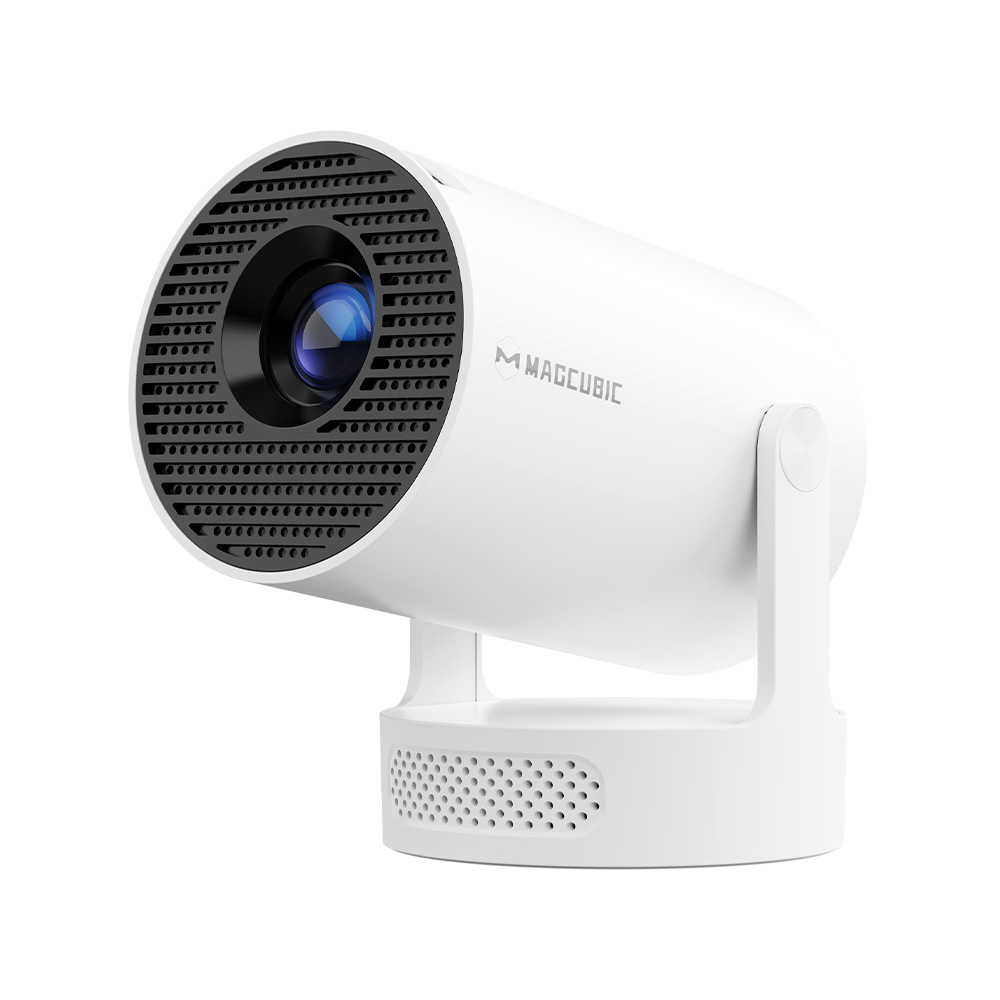
Magcubic HY350 Home Cinema Projector
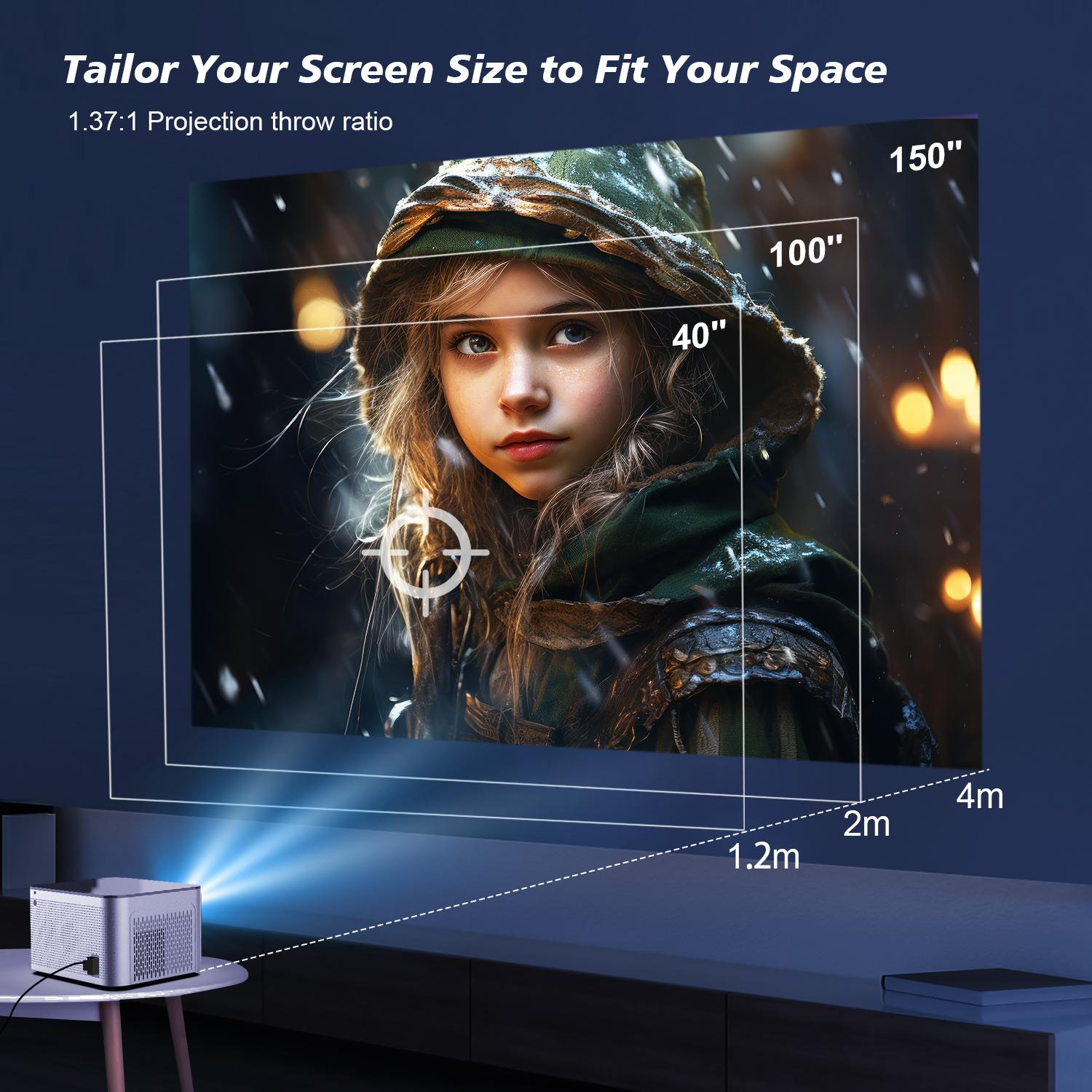
This portable projector performs well both indoors and outdoors. Its throw ratio is 1.37:1, within the standard range. With a projection distance of 1.2–4 meters and a screen size of 40–150 inches, it is ideal for home entertainment and daily use.
2. Short Throw Projection
Short throw projectors typically feature a throw ratio of 0.4–0.9:1, allowing users to create a large image from a much shorter distance.
Example: From just 1 meter, a short-throw projector can produce an 80–100 inch display.
This type is ideal for small spaces such as bedrooms, apartments, classrooms, and compact meeting rooms where installation distance is limited.
Recommended Model
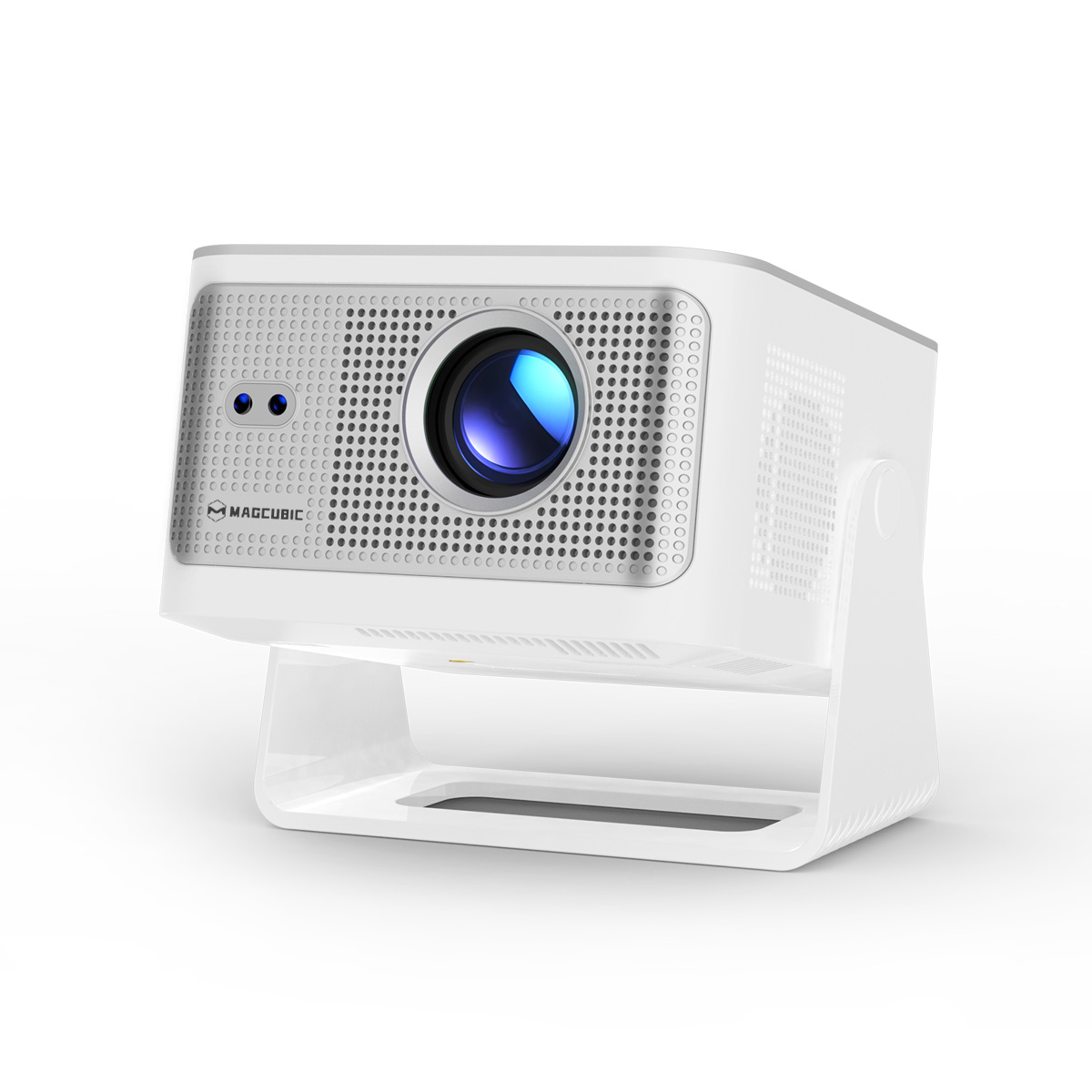
Magcubic HY450 Short Throw Portable Projector
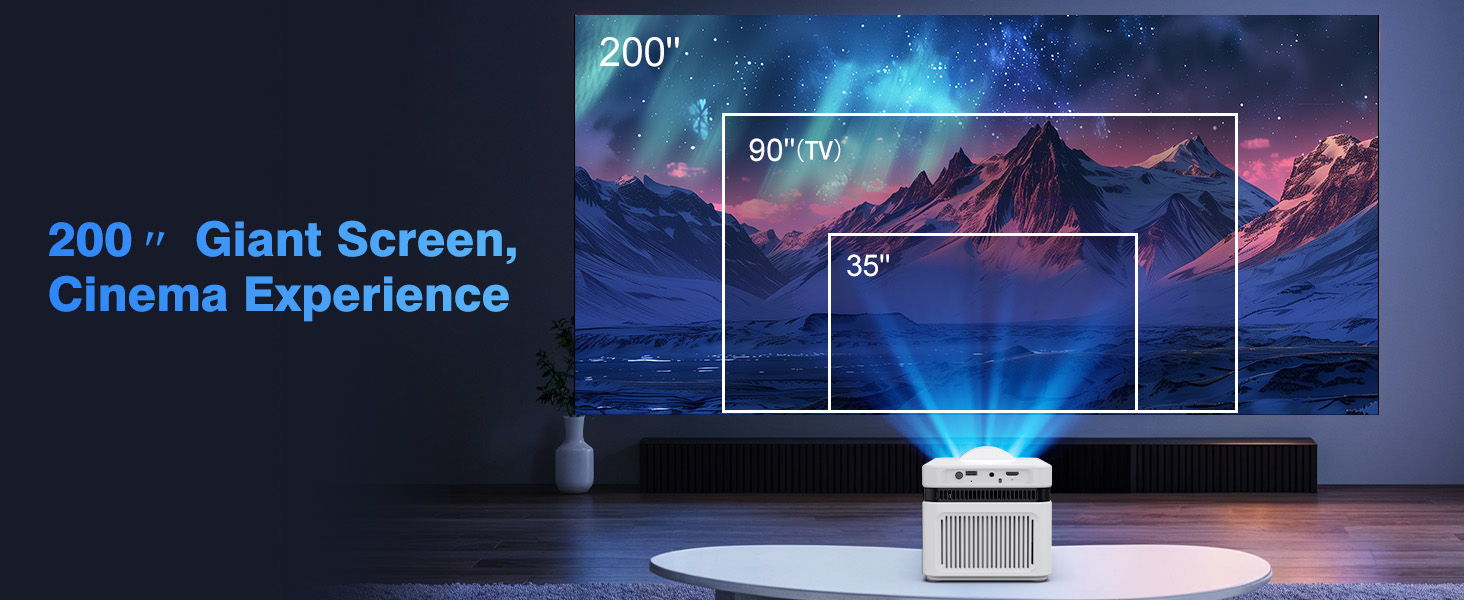
The HY450 is designed for limited-space environments. With 700 ANSI lumens, it provides reliable brightness for indoor and outdoor use. Its 0.6:1 short throw ratio allows projection from only 55 cm, making it perfect for small rooms. It supports 40–200 inch projection sizes for flexible usage.
Conclusion
Throw Ratio is an essential parameter for any projector, whether it is a portable mini projector or a home theater model. When choosing a projector, always consider the throw ratio carefully. It directly affects your viewing experience, space usage, and overall satisfaction.
If you are exploring portable projectors, understanding the throw ratio will help you make a smarter purchase decision and choose the right device for your needs.