In today’s digital world, screen time has skyrocketed. From binge-watching shows to working long hours in front of displays, our eyes are under constant strain. This growing concern has led many people to question whether switching devices could help reduce eye fatigue.
One of the most debated topics is tv vs projector—is a projector more eye-friendly, or is that just clever marketing? The truth is, eye comfort isn’t determined by a single factor. Magcubic uses scientific research to help you understand the differences between them, enabling you to make a better choice.
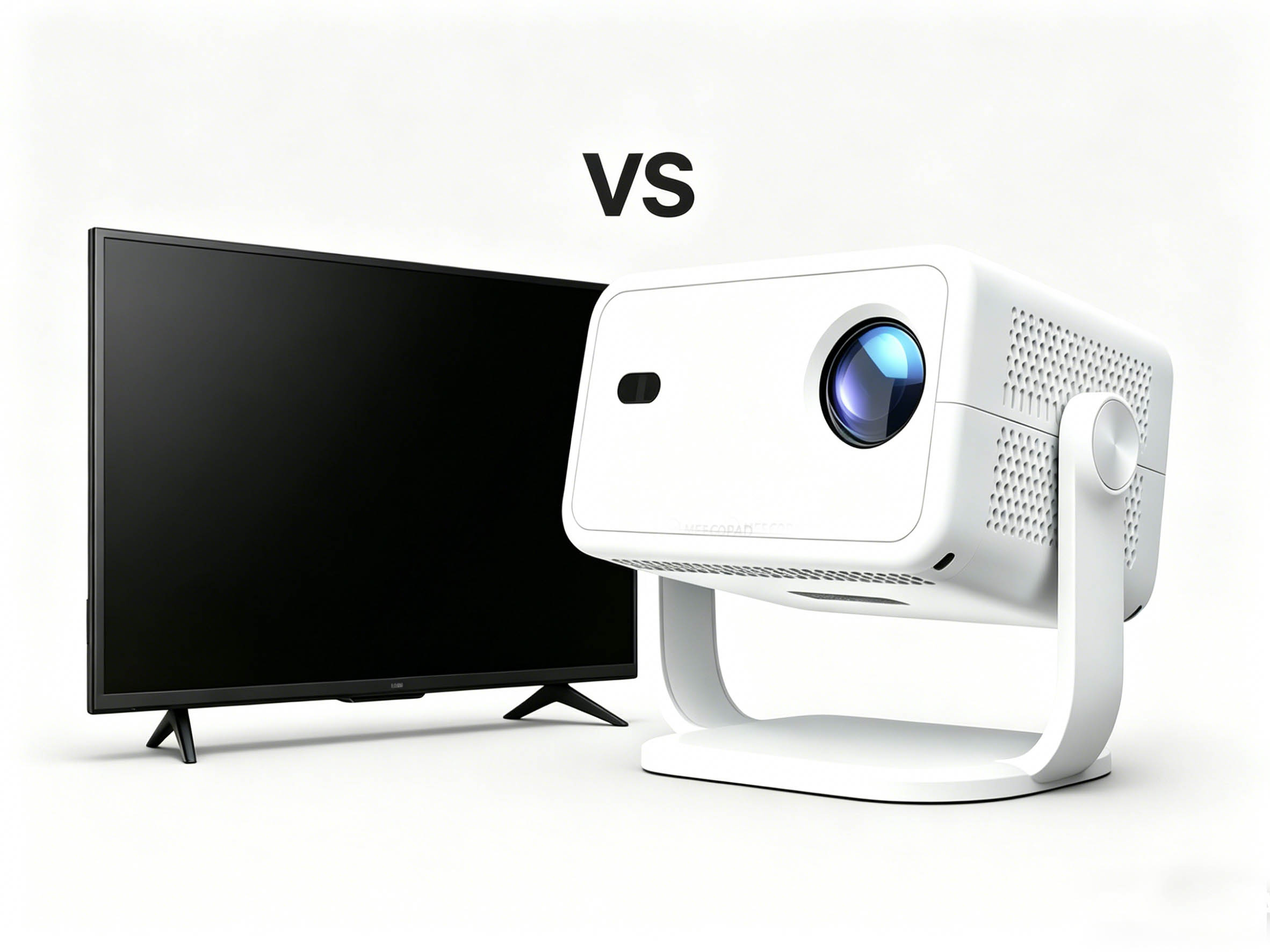
Eye Comfort Principles: Theoretical Comparison
Below is a clear breakdown of how projectors and TVs differ in terms of eye health:
| Dimension | Projector | TV |
|---|---|---|
| Imaging Principle | Diffuse reflection (light reflects off wall/screen into eyes) | Direct emission (LED/OLED light shines directly into eyes) |
| Blue Light Exposure | Light source is farther away, reducing intensity | Close-range exposure makes blue light more direct |
| Flicker Issues | Some DLP projectors may cause rainbow effect or flicker | Mature flicker control technology in LCD/OLED |
| Brightness Control | Affected by ambient light; too dim may strain eyes | Stable brightness but can be too harsh if over-bright |
From a theoretical standpoint, the tv vs projector debate shows that projectors may have a natural advantage due to indirect light, but they are not automatically safer.
Real-World Usage: Practical Comparison
1. Viewing Distance
Projectors naturally require a longer viewing distance. For example, a 100-inch projected image typically needs about 3–4 meters (10–13 feet) of space. This extended distance allows your eyes to stay more relaxed, reducing strain during long viewing sessions.
In contrast, even large TVs—such as a 75-inch or 85-inch model—are usually watched from 2–3 meters (6–10 feet). While still comfortable, this closer distance means your eyes are working slightly harder compared to a projector setup.
This is one of the key advantages often highlighted in the tv vs projector comparison.
2. Ambient Light Impact
Projectors perform best in darker environments. For instance, watching a movie on a projector in a dimmed living room can create a cinematic experience with softer light entering your eyes.
However, watching in a completely dark room can actually increase eye fatigue due to high contrast between the bright screen and the dark surroundings. For example, binge-watching a 2-hour movie in total darkness may leave your eyes feeling dry or strained.
TVs offer more flexibility. You can watch comfortably with lights on—such as during daytime viewing or casual streaming sessions. For example, watching the news or a Netflix series in a well-lit room is much easier on the eyes with a TV.
3. Image Clarity
When it comes to clarity, TVs usually have the upper hand. Modern TVs with 4K or even 8K resolution deliver sharp, detailed images. For example, watching a nature documentary on a 4K OLED TV allows you to see fine details like leaves, textures, and subtle color gradients without straining your eyes.
Projectors, on the other hand, vary widely depending on quality. A high-end 4K projector can perform well, but many budget projectors offer lower resolution and contrast. For example, watching subtitles on a low-resolution projector may require extra focus, especially if the text appears slightly blurry.
In the tv vs projector debate, this clarity difference plays a major role in long-term eye comfort.
Common Misconceptions
Myth 1: Projectors are always better for your eyes
Truth: Low-quality projectors with poor brightness and resolution can actually strain your eyes more.
Myth 2: TVs are harmful to your eyes
Truth: Modern TVs come with advanced features like low blue light modes and flicker-free technology, making them much safer than before.
Myth 3: Bigger screens are always better
Truth: Proper viewing distance and image clarity matter more than sheer size.
When evaluating tv vs projector, it’s important to look beyond marketing claims and focus on actual performance.
Practical Tips for Eye Protection
- Follow the 20-20-20 rule: Every 20 minutes, look at something 20 feet away for 20 seconds
- Balance ambient lighting: Avoid watching in completely dark or overly bright environments
- Prioritize distance: Sit as far as comfortably possible—this is where projectors shine
- Choose quality devices: High-lumen projectors or TVs with blue light certification are better options
- Take regular breaks: Even the best screen can’t prevent fatigue if used continuously for hours
These habits matter more than the outcome of the tv vs projector debate itself.
Which Should You Choose?
In the tv vs projector comparison, projectors offer advantages in viewing distance and diffuse light, which can reduce eye strain in ideal conditions. Meanwhile, TVs excel in clarity, brightness control, and adaptability to different environments.
Ultimately, your choice should depend on your usage scenario, budget, and household needs.
If you’re leaning toward a projector, consider Magcubic. As a professional projector manufacturer, we offer high-quality products and support small-batch customization to meet your specific needs.